
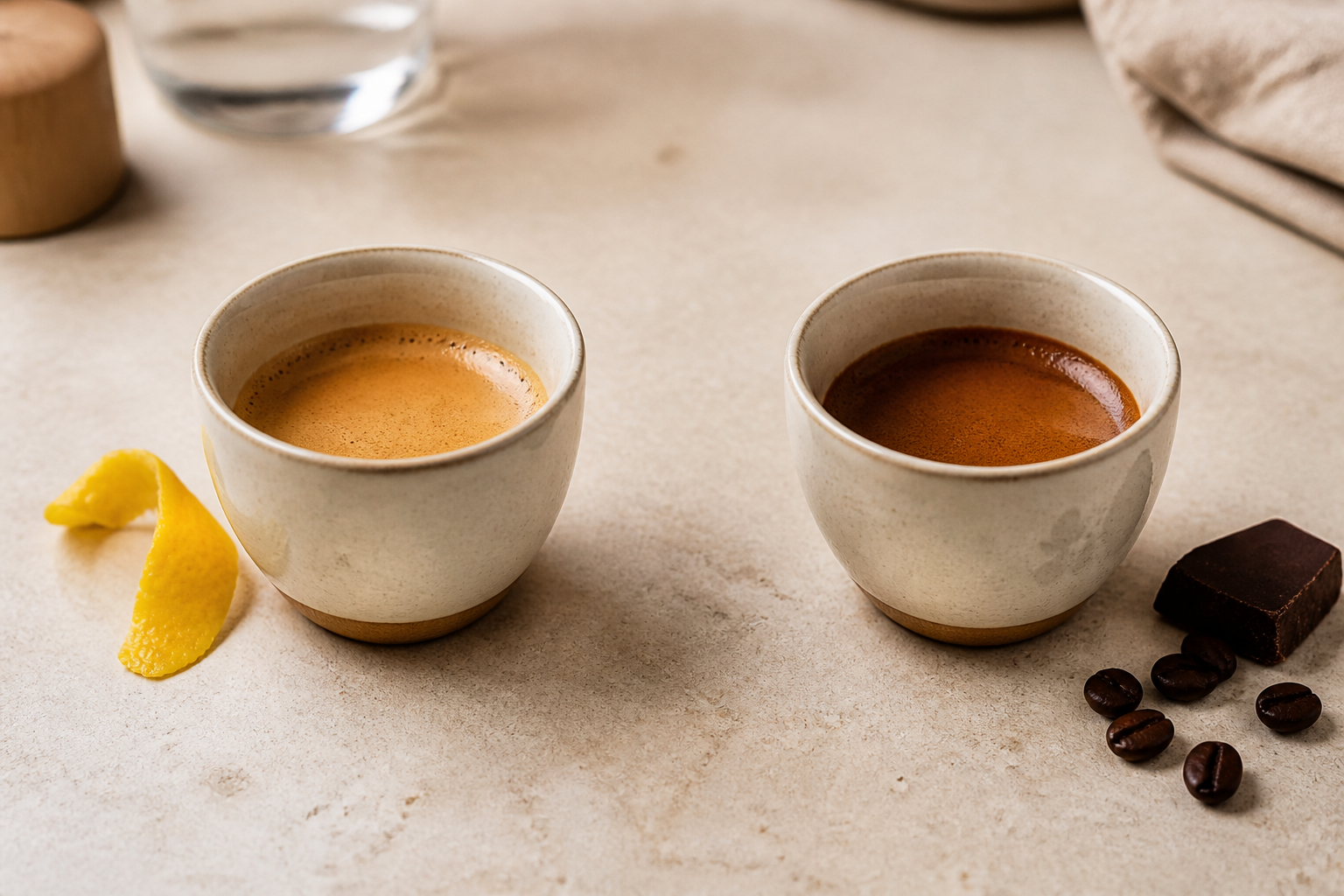
Your espresso tastes wrong—but is it sour or bitter?
Learning the difference makes dialing in much easier. Sour espresso usually needs more extraction. Bitter espresso often needs less. The key is changing one thing at a time.
The quick diagnosis
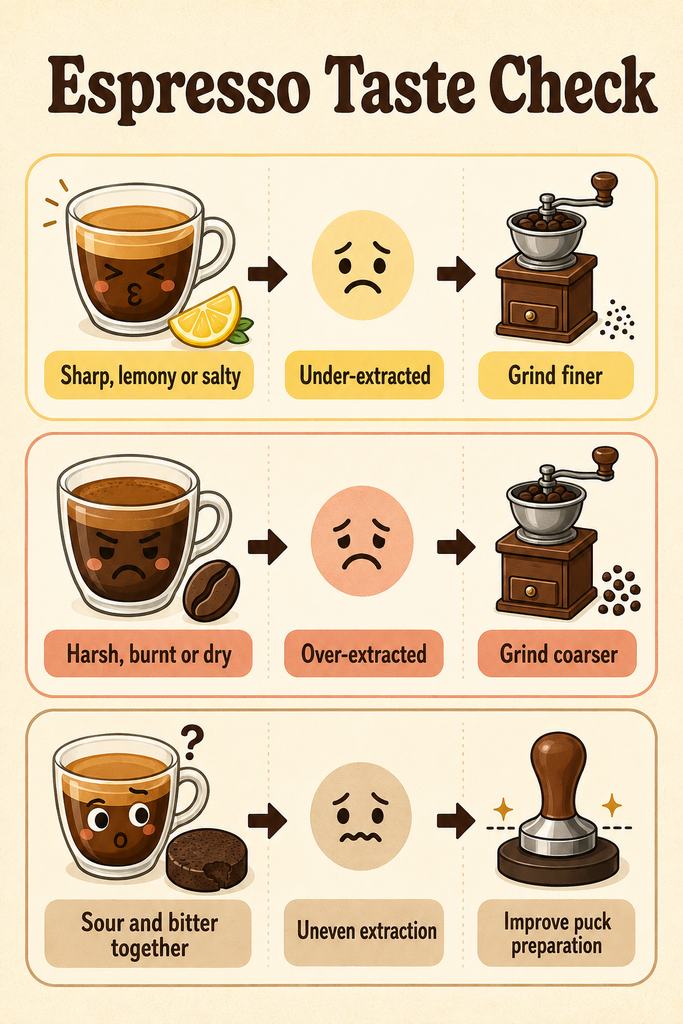
If your espresso tastes sour
Sour espresso feels sharp and unfinished. It may remind you of lemon juice or unripe fruit, with very little sweetness.
This usually means the water did not extract enough flavour from the coffee.
Try these adjustments in order:
- Grind slightly finer. This slows the water and helps it extract more.
- Let the shot run a little longer. If you use 18 grams of coffee and stop at 36 grams of espresso, try 40 grams.
- Increase the water temperature slightly. This can help with lightly roasted coffee.
- Check your puck preparation. Distribute the grounds evenly and tamp level.
Remember that acidity is not always a defect. Specialty coffee can naturally taste like citrus, berries or stone fruit. Good acidity feels juicy and sweet; unpleasant sourness feels sharp and unbalanced.
If your espresso tastes bitter
Bitter espresso may taste burnt, harsh or unpleasantly heavy. It can also leave your mouth feeling dry.
This often means the coffee extracted too much—or that the roast itself is quite dark.
Try these adjustments:
- Grind slightly coarser. This allows the water to move through more easily.
- Stop the shot earlier. A shorter yield may reduce the harsh finish.
- Lower the water temperature. Dark roasts often taste better at a slightly lower temperature.
- Clean your equipment. Old coffee oils on the basket, portafilter or group head can make every shot taste bitter.
If every recipe still tastes smoky or burnt, the coffee may simply be roasted darker than you prefer.
What if it tastes sour and bitter?
An espresso can taste sour and bitter at the same time. This usually points to uneven extraction.
Water may be rushing through a weak area in the coffee puck while struggling to pass through another. Baristas call this channeling.
To reduce channeling:
- Use a dry, clean basket.
- Break up visible clumps.
- Distribute the coffee evenly.
- Tamp level.
- Brew immediately after inserting the portafilter.
Change one thing at a time
Start with a simple recipe, such as 18 grams of coffee producing 36 grams of espresso. Taste it, make one small adjustment and compare the next shot.
If it tastes sour, grind finer. If it tastes bitter, grind coarser. If it tastes both sour and bitter, work on your puck preparation.
Shot time can help you understand what happened, but it is not the final judge. The best recipe is the one that gives you sweetness, balance and a pleasant finish.