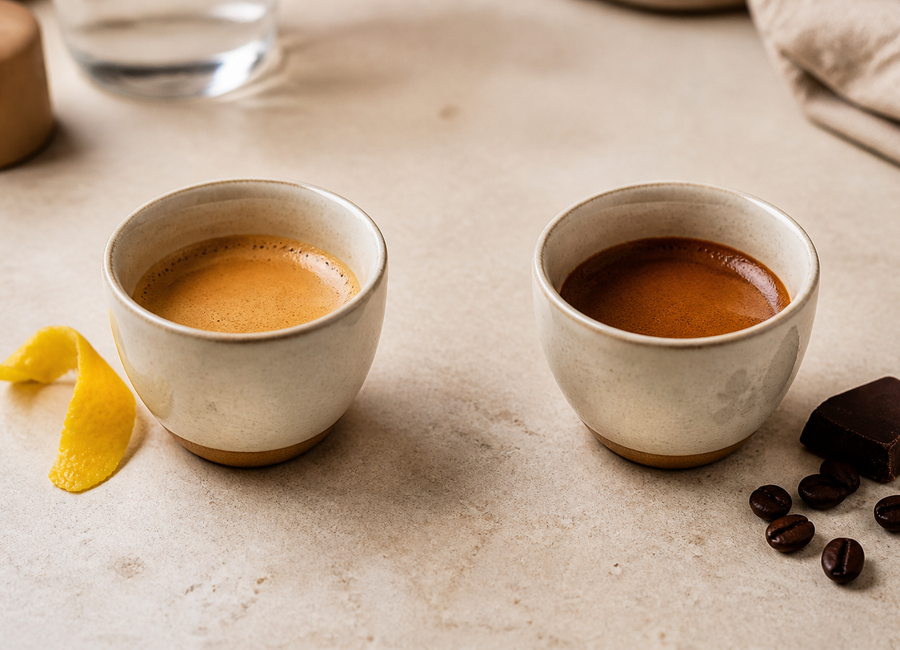

Espresso ratio sounds technical, but the idea is simple: it compares the weight of dry coffee in your basket with the weight of espresso in your cup.
If you use 18 grams of ground coffee and produce 36 grams of espresso, your ratio is 1:2.
- 18 grams in
- 36 grams out
- Espresso ratio: 1:2
Knowing this ratio makes espresso easier to repeat and adjust. Instead of relying on how full the cup looks, you have a clear recipe you can taste, record and improve.
Dose and yield
Every espresso ratio has two parts:
- Dose is the dry coffee placed in the portafilter.
- Yield is the liquid espresso collected in the cup.
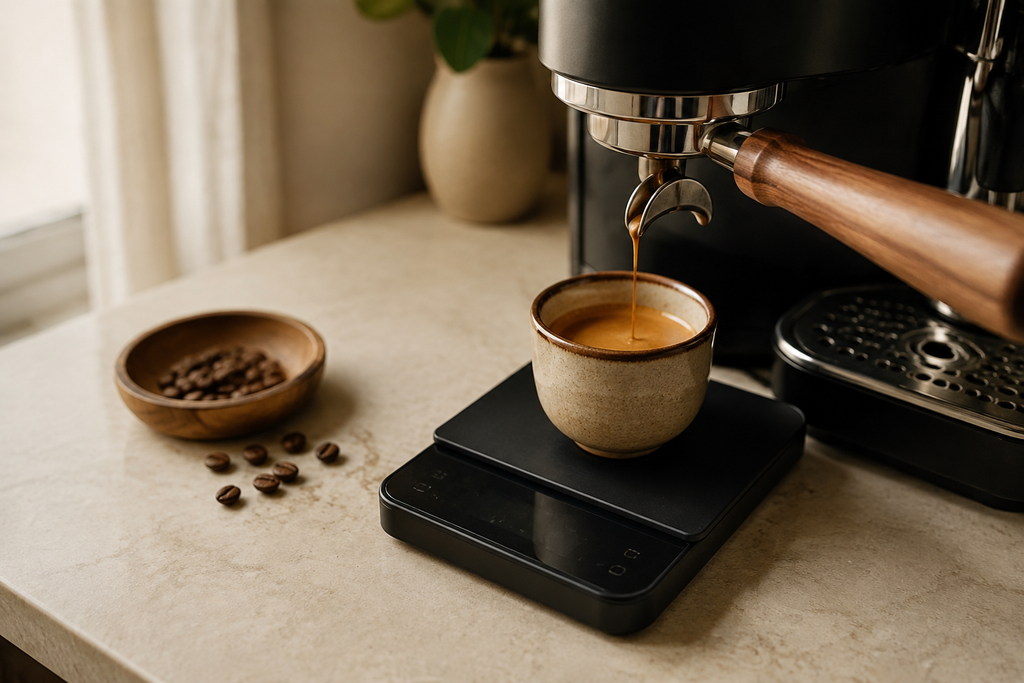
Both are measured by weight. A small digital scale is more reliable than measuring by volume because crema can make two identical shots look different.
To calculate the ratio, divide the espresso yield by the coffee dose. For example:
36 grams out ÷ 18 grams in = 2
That gives you a 1:2 ratio.
What do 1:1, 1:2 and 1:3 mean?
1:1 — short and concentrated
An 18-gram dose produces approximately 18 grams of espresso.
This short shot is often called a ristretto. It has a concentrated texture and intense flavour, but it can taste sour or incomplete if the coffee is difficult to extract.
1:2 — a balanced starting point
An 18-gram dose produces approximately 36 grams of espresso.
The 1:2 ratio is a useful starting point for many coffees. It often provides a comfortable balance between body, sweetness and clarity. It is not a universal rule, however—the best ratio is the one that suits the coffee and your taste.
1:3 — longer and lighter
An 18-gram dose produces approximately 54 grams of espresso.
A longer ratio usually creates a lighter body and extracts more from the coffee. It can help a lightly roasted coffee open up, although running the shot too far may introduce dryness or bitterness.
How roast level affects your ratio
Different coffees may taste better at different ratios.
Dark roasts extract easily and often work well with shorter ratios, such as 1:1.5 or 1:2. Extending them too far can emphasize bitterness.
Light roasts are less soluble and may benefit from ratios around 1:2.5 or 1:3. The extra water can reveal more sweetness and clarity.
Medium roasts often provide a good starting point at 1:2.
These are guidelines rather than fixed rules. Two coffees with the same roast level can still behave differently.
How to find the right espresso ratio
Begin with a consistent dose—18 grams, for example—and aim for 36 grams in the cup.
Taste the espresso after it cools slightly.
If it tastes sharp or sour, try increasing the yield to 40 or 42 grams. This gives the water more opportunity to extract sweetness. Our guide to sour versus bitter espresso explains the other adjustments you can make.
If it tastes harsh, bitter or dry, try stopping the shot earlier. A yield of 32 or 34 grams may provide more balance.
Keep the dose fixed while testing different yields. Changing both at once makes it difficult to understand what improved the shot.
Ratio is not the same as extraction time
Espresso ratio tells you how much coffee went in and how much liquid came out. It does not tell you how quickly that happened.
Two shots can both use a 1:2 ratio while one finishes in 20 seconds and the other takes 35. They will probably taste different because grind size and flow also influence extraction.
Use ratio as your recipe, then use [espresso extraction time](/espresso-extraction-time/) as a diagnostic clue. If the shot flows far too quickly or slowly, adjust the grind while keeping the dose and yield consistent.
For a complete workflow, follow our guide on [how to dial in espresso](/how-to-dial-in-espresso/).
Start with 1:2, then trust your taste
A 1:2 espresso ratio is a practical starting point—not a definition of perfect espresso.
Weigh your dose, measure your yield and taste the result. If the coffee needs more sweetness and clarity, try a longer ratio. If it needs more body and less bitterness, try a shorter one.